Letter From The editor
There is an inevitable shift many people experience as they transition from their late twenties into their early thirties: a final shedding of youth's frivolity in exchange for a deeper sense of responsibility. A deal none of us necessarily want to make, yet time contractually straps us in regardless: keep your arms and legs inside the ride at all times, things are about to get interesting.
This period is sometimes referred to as a Saturn return - the point when Saturn completes its orbit and returns to the same position it occupied during your birth. The cycle lasts about 30 years, and astrologers link it to periods of disruption, self-reflection, and major change. Whether cosmic or coincidence, I felt a distinct shift as I neared thirty. Some changes I chose, some arrived uninvited, and others were the inevitable consequences of my own failings.
As I put my focus towards adjusting to my new normal, something utterly unexpected descended on me: a dense, persistent wall of writer’s block. My creative instinct, which I had always felt was an extension of myself, fell muted beneath the white noise of change. Attempts at writing felt as painfully useless as picking up a pen with a broken arm. Then, one afternoon while reading Vogue, I found myself absorbed by the article "Dangerous Liaisons” by Oyinkan Braithwaite. Something in her writing, reflective and brutally honest, cut straight through that static and inspired a desire to write again. My new spark navigated me beyond the familiar terrain of fictional short stories and scripts. Following the article, I wanted to create something honest and personal, drawn from life rather than imagination.
Then came the question: what do I write about?

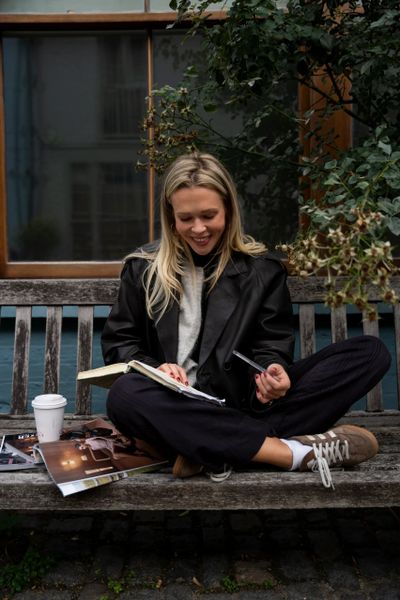
With so much of my life changing around me, I found myself searching for something that still felt constant. Something to firmly plant my flag in and announce: this will never change; this will always be part of me. For me, that solid foundation was London.
I was born in London, and aside from a brief stint in Oxford for university (where I still found myself slipping back to London at night, like a hopeless romantic returning to a former flame), I’ve never really left. I’ll be the first to admit I have romanticised living in places like Paris in the way many creatives do, imagining myself walking the streets once trodden by my writing idols, as if proximity might evoke inspiration. I even entertained a Berlin chapter, convinced that the two people I knew there could serve as metaphorical armbands as I threw myself into the deep end of adventure. In the end, I chose to stay.
After all, London raised me. It’s where I experienced my childhood, my (somewhat) rebellious teenage years, the highs of boundary-blurring, intoxicating love that dissolves all caution, and the equal-and-opposite lows: heartbreaks and humblings that would give most sympathy for the villain origin story. It was also in London that I was put on the path of a specific art teacher, Mr Mataya, who reconstructed my philosophy of creativity.
He taught me that creativity isn’t born from colouring neatly within the lines, but from the willingness to stray beyond them. Once the crayon slips, and the marks become chaotic, you realise the material from which you draw doesn’t change in quality, nor does it lose its vibrancy. If the discarded lines reflect our own missteps and human messiness, how is it any less art? Embracing chaos rather than trying to control it became the foundation of this project.